

Most of us think of our dishwasher as something that cleans for us and not something that needs to be cleaned as well. This guide will walk you through the easy steps on how to clean it (frugally), why it should be done, and how often it should be cleaned.
The good news? Proper dishwasher maintenance only takes a moment of your time, and you can clean your dishwasher for as little as a few pennies using some simple pantry staple items you probably have on hand already!

Save This Recipe to Your Inbox
By signing up, you’ll join our email list and can unsubscribe anytime.
Over time, your dishwasher collects grease, soap scum, leftover food bits, and hard water deposits. All of that gunk adds up and can eventually look and smell bad. And not only that, but it can keep your machine from doing its job.
If you've noticed cloudy glasses, funky smells, or dishes that don't quite sparkle anymore, your dishwasher might be begging for a little love and care.
In this guide, we'll break down:
- Why cleaning your dishwasher matters (and how it can actually save you money)
- Simple, frugal DIY cleaning methods using pantry staples
- Trouble spots people forget to clean that make the biggest difference
- How often you should really be doing this to keep your dishwasher happy
And along the way, I'll share a few of my favorite hacks, including one straight from my mom's kitchen that involves… Kool-Aid.
Jump to:
🍯 Why Cleaning Your Dishwasher Matters
Your dishwasher isn't just an appliance; it's a workhorse that saves time, energy, and a lot of water. But like any hardworking machine, it needs maintenance. Here's why it's important to learn how to deep clean your dishwasher and how a regular deep clean is worth your time:
- Banishes bad smells - Leftover food bits, mold, and mildew can cause odors.
- Prevents hard water buildup - Mineral deposits can clog spray arms and dull your dishes.
- Keeps cleaning power strong - No more gritty residue or spots on your glasses.
- Saves money - A clean dishwasher runs more efficiently, lasts longer, and helps avoid costly repairs.
Fun fact: ENERGY STAR dishwashers can use up to 50% less energy than handwashing and save 8,000 gallons of water a year (Energy.gov). But dirty filters, blocked spray arms, and hard water buildup can make them work harder, using more energy and water in the long run.
💰 How a Clean Dishwasher Saves Money
Here's where your frugal side will smile:
- Lower utility costs - A clean machine runs more efficiently.
- Fewer repairs - Prevents clogs and strain on the motor.
- Longer lifespan - Postpones the need for replacement.
The Department of Energy says an ENERGY STAR dishwasher can cost as little as $35/year to run. Neglecting cleaning can push those costs higher due to inefficiency.
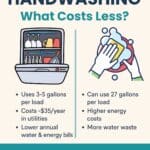
🧼Dishwasher vs. Handwashing: What Costs Less?
Water Savings: Dramatic Advantage for the Dishwasher
- Dishwasher: Uses about 3-5 gallons per cycle (ENERGY STAR models often use even less, around 2.4-3 gallons)
- Handwashing: Can use up to 27 gallons per session, depending on habits
- Annual impact: Switching to a dishwasher could save over 5,000 gallons annually
[Sources: The Spruce, Better Homes and Gardens, Wikipedia]
Energy & Utility Expense: Dishwasher Wins or Keeps Pace
- Energy Star Dishwasher: Around $35/year to operate; more efficient models reduce water and energy even further.
- Handwashing: Harder to calculate, but running hot water consistently can add up, and generally exceeds dishwasher energy use.
[Sources: Department of Energy, Save Energy NB, KitchenAid]
Annual Savings Estimates: Impressive Potential
- Angi reports up to $465/year in combined water and energy savings with a modern dishwasher.
- Better Homes & Gardens states over $1,300 in savings over 12 years (~$108 annually), attributing it to efficiency and less workload.
Time is Money (and Sanitation)
- Handwashing a day's worth of dishes can take 65-106 minutes, compared to just loading, running, and unloading a dishwasher, plus the heat in dishwashers (140°F) sanitizes better.
"The largest cost is heating the water. Doing a lot of small hand wash loads probably costs more than one full dishwasher load."
"If you value your time even at only $10/hr, you're spending $35 a week handwashing; the dishwasher never burns that much electricity, and it uses less water."
🧽Pre-Rinsing: The Hidden Cost Multiplier
Water Use Skyrockets
- Pre-rinsing before loading a dishwasher can add up to 6 gallons per minute, depending on sink flow.
- If you rinse for 2 minutes per load, that's ~12 extra gallons, tripling the water use of an efficient dishwasher cycle.
Money Down the Drain
- All that extra hot water means higher utility bills.
- The U.S. Department of Energy estimates skipping pre-rinsing can save up to 6,500 gallons of water and over $40/year.
Modern Dishwashers Don't Need It
- ENERGY STAR and most newer models are designed to handle food residue. In fact, Whirlpool notes pre-rinsing can confuse sensors that measure soil levels, making cycles less efficient.
[Source: Energy.gov]
🍋 Frugal & Natural Dishwasher Cleaning Methods
The beauty of these methods? They're simple, cheap, and effective, no fancy tablets required. Cleaning your dishwasher with bleach is a common cleaning method, but not one that we will be sharing today. Instead, look at these simple yet reliable options.
The Classic Two-Step (Vinegar + Baking Soda)
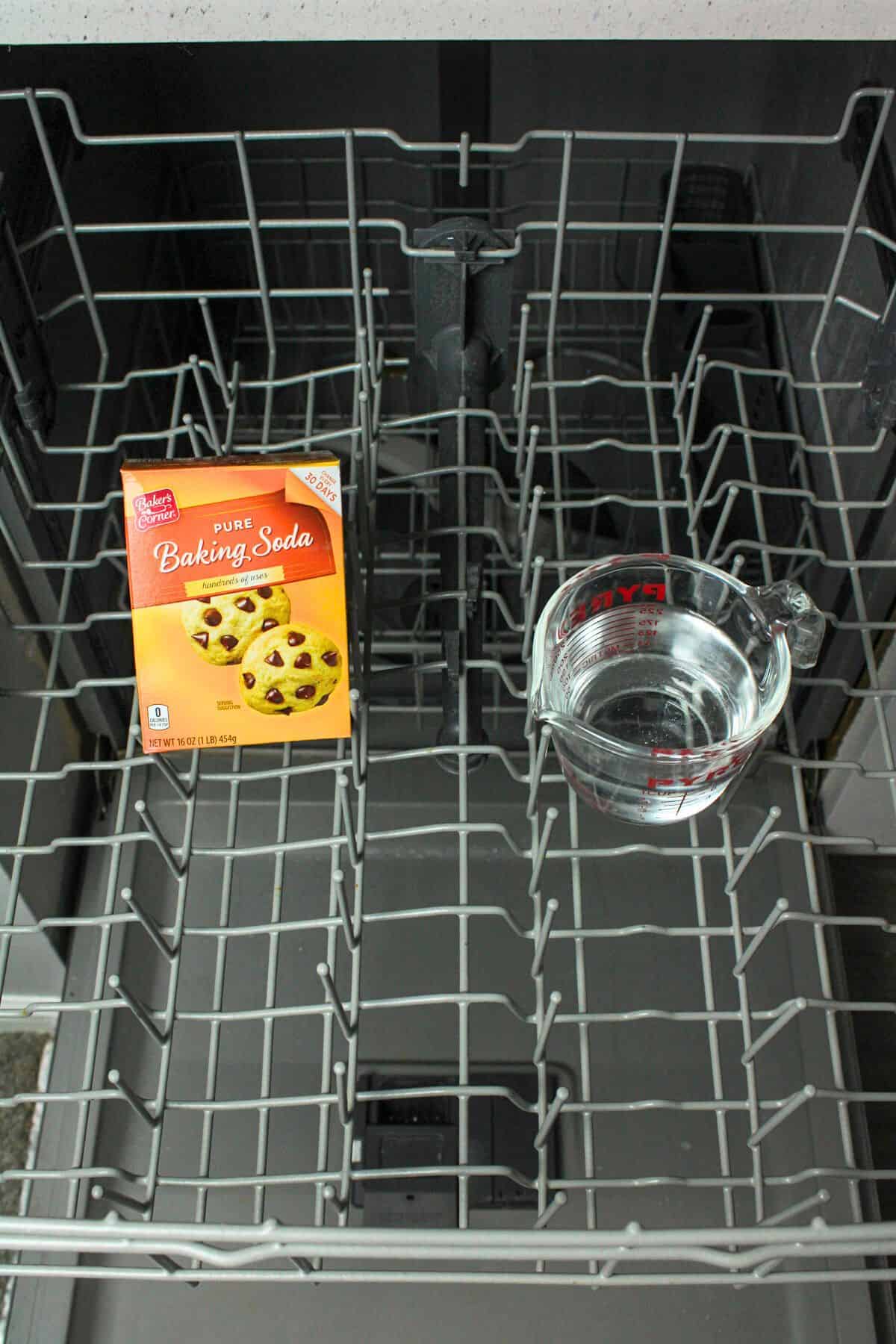
How to clean a dishwasher with vinegar and baking soda. To clean a dishwasher with vinegar and baking soda is a classic two-step method that both cleans and deodorizes.
Step 1 - Vinegar Rinse:
- Place 1 cup of white vinegar in a bowl or mug on the top rack.
- Run a hot cycle with no dishes or detergent.
Note, you can also clean the dishwasher with apple cider vinegar.
Step 2 - Baking Soda Blast:
- Sprinkle ½-1 cup of baking soda along the bottom of the dishwasher.
- Run a short, hot cycle to deodorize and freshen.
💡 Tip: Try citrus-infused vinegar like in my All Purpose Citrus Vinegar Cleaner for extra grease-cutting power and a fresh scent.
My Mom's Genius Trick: Lemon Kool-Aid
I grew up watching my mom do this, and it's as fun as it is effective.
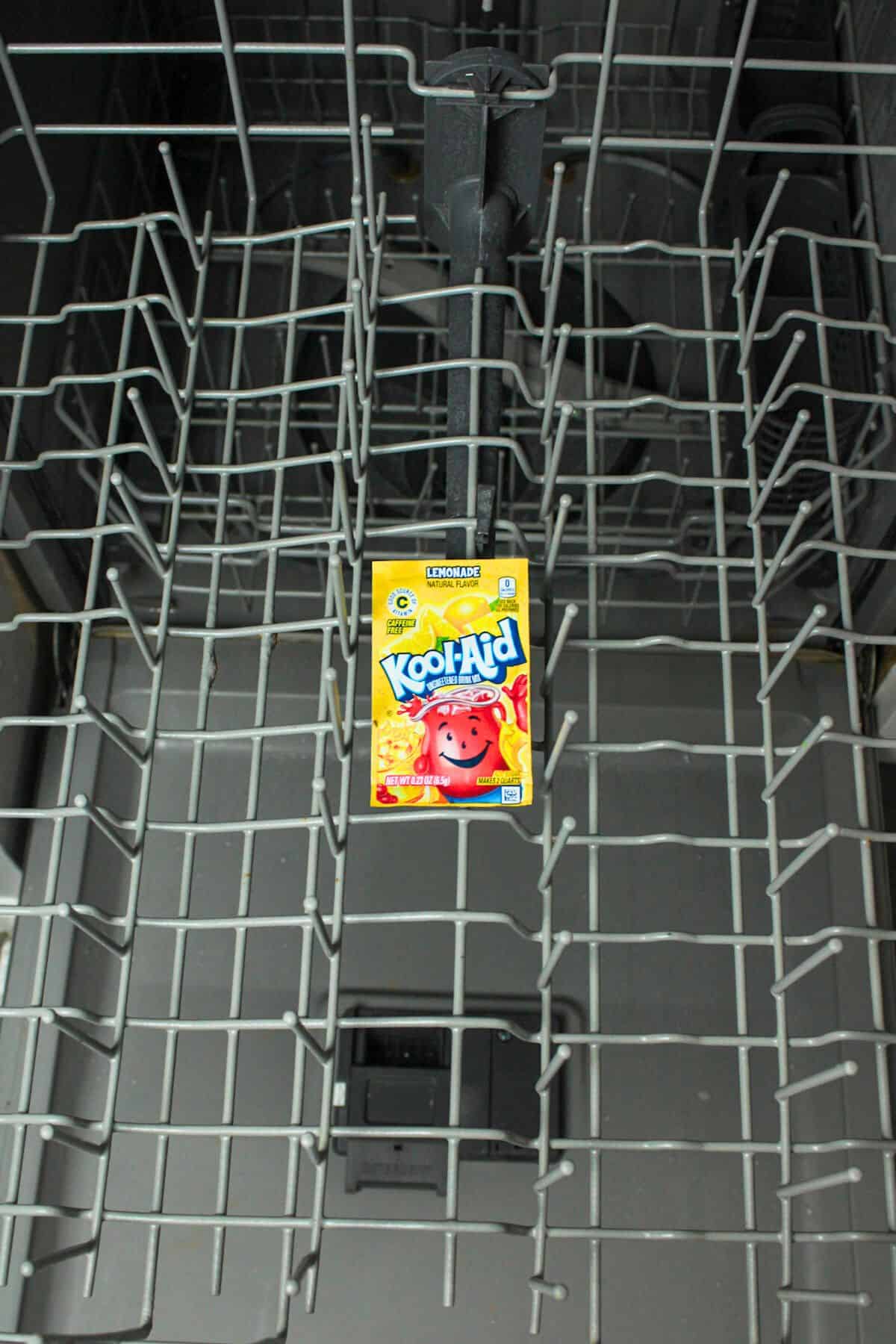
How to clean your dishwasher with Kool-Aid:
- Make sure it's unsweetened Lemon Kool-Aid.
- Empty your dishwasher.
- Pour one packet into the detergent dispenser.
- Run on a hot cycle.
The citric acid works wonders on mineral deposits and leaves behind a sunny lemon scent.
This has been my go-to cleaning method for years, and it works wonderfully.
Citrus Peel Vinegar Rinse
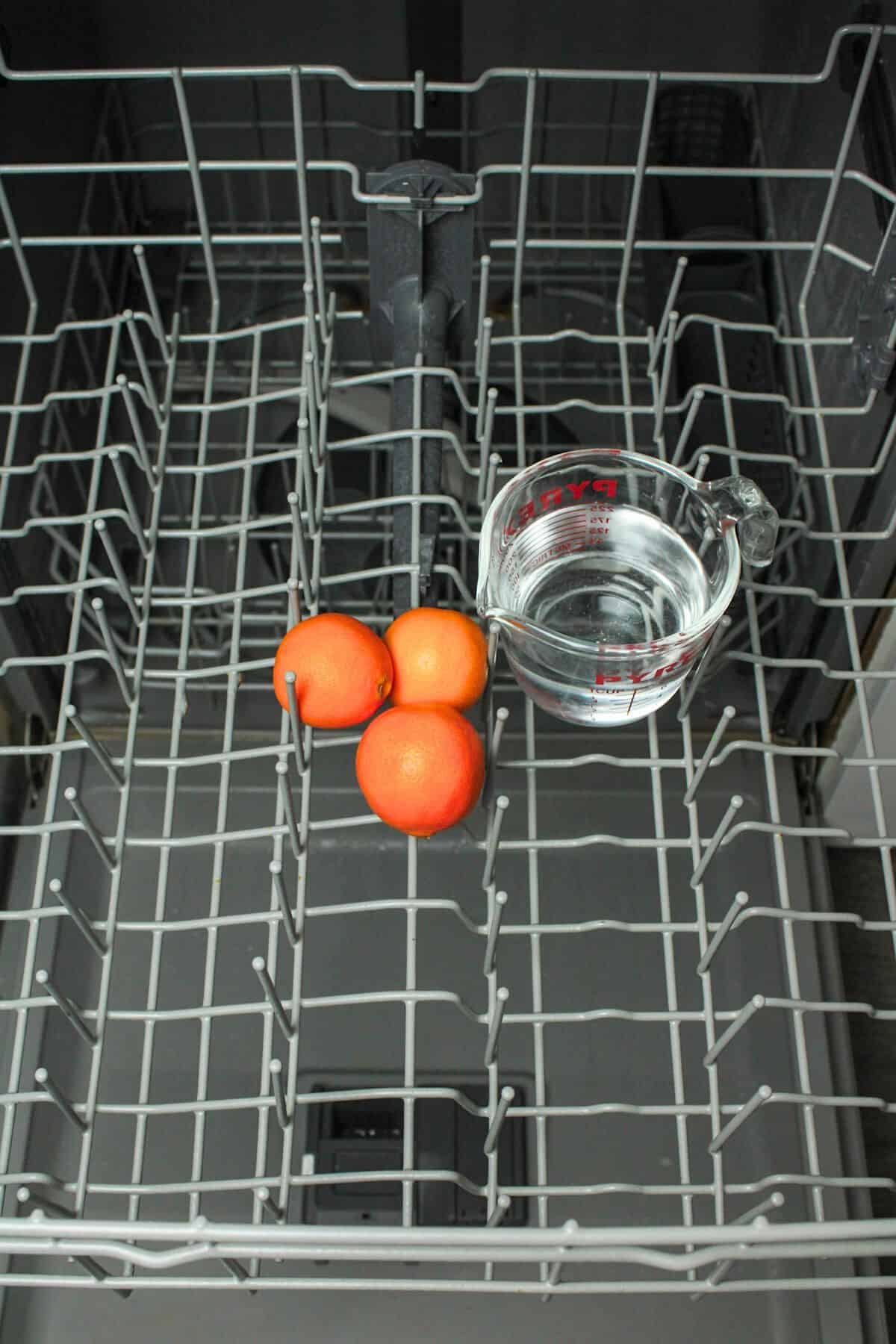
For a zero-waste, eco-friendly cleaner:
- Save lemon, lime, or orange peels.
- Soak them in vinegar for 1-2 weeks.
- Strain and use 1 cup as your vinegar rinse.
Not only does this smell amazing, but it's also naturally antibacterial.
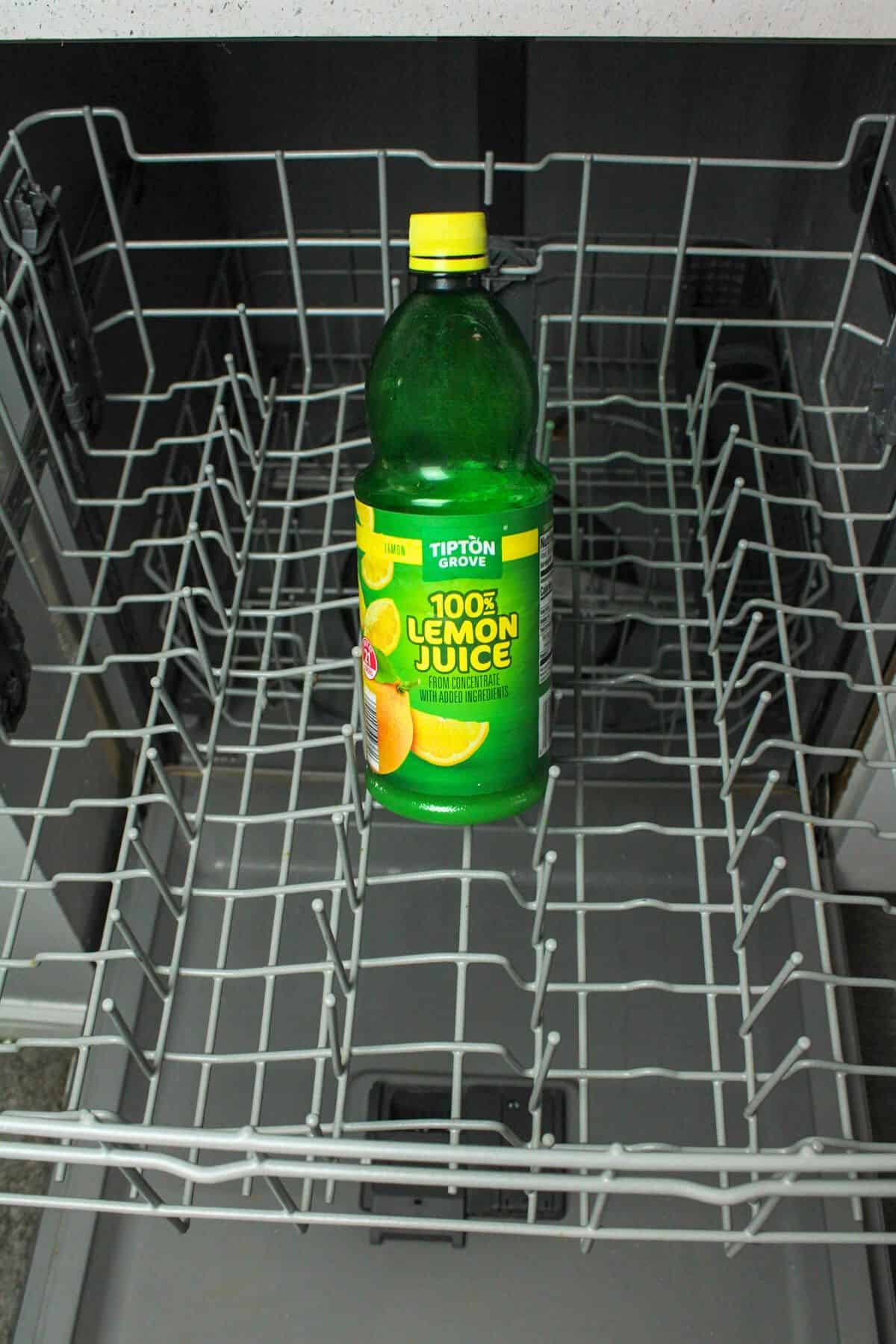
4. Citric Acid or Lemon Juice Deep Clean
Perfect for hard water areas:
- Add 1-2 tablespoon citric acid powder (or ¼ cup lemon juice) to the empty dishwasher.
- Run a hot cycle.
This is especially good for descaling if you notice white film on dishes or inside your machine.
🔍 Trouble Spots You Shouldn't Ignore
Even the best cleaning cycle won't help if certain parts are clogged or coated in grime. Focus on these areas:
1. The Filter
Cleaning a dishwasher filter is important because it's where food bits get caught.
- Found under the bottom spray arm.
- Twist or lift out, rinse under hot water, and scrub with a soft brush.
- Clean monthly (or weekly if you don't pre-rinse).
2. Spray Arms
- Check for clogged holes; a toothpick works great here.
- Remove and soak in vinegar if heavily coated. This same trick works for blocked shower heads as well.
3. Door Seals & Edges
- Wipe with a vinegar-soaked cloth or baking soda paste.
- Don't forget the hidden crevices around hinges.
4. Drain Area
- Look for trapped food or buildup at the base.
- Clear by hand and flush with hot water or vinegar.
📅 How Often Should You Clean Your Dishwasher?
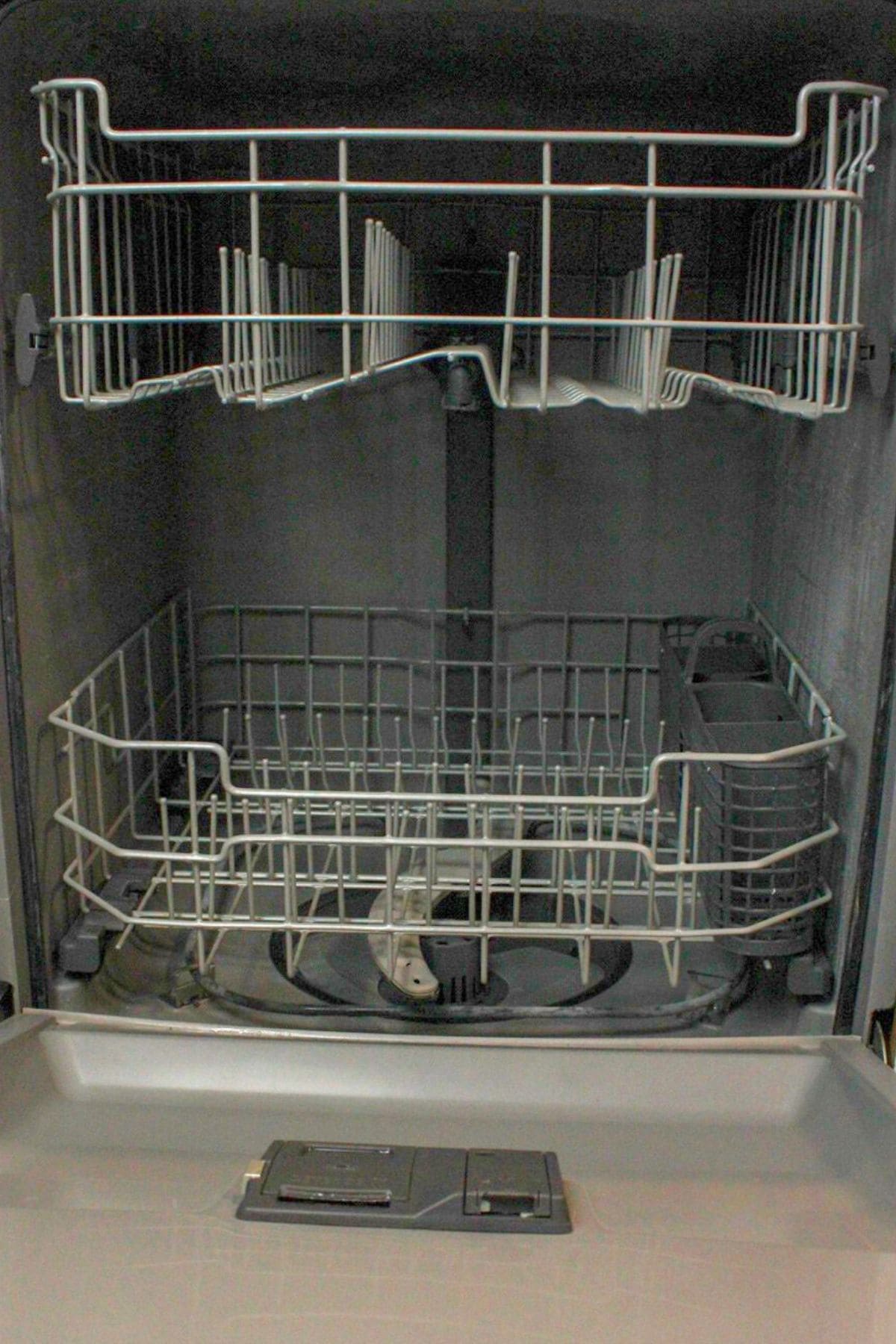
- Weekly: Wipe seals and edges, clean the filter.
- Monthly: Run vinegar + baking soda or Kool-Aid clean.
- Every 1-2 months: Check spray arms and drain; deep descale if needed.
🐝 Final Thoughts
Your dishwasher might handle the dirty work, but it still needs you to keep it in top shape. With a few pantry staples, vinegar, baking soda, citrus, or even Kool-Aid, you can:
- Keep your dishes sparkling
- Prevent bad smells
- Save money on bills and repairs
The best part? Most of these methods take less than an hour and cost pennies compared to commercial cleaners.
The best way to clean your dishwasher is the way that works best for you. Personally, I clean the filter, run a hot cycle with a lemonade Kool-Aid packet, and then follow up inside the machine with a citrus vinegar soaked rag to clean away at the edges and seals. But you may find another method works best for you.
So, grab that vinegar, raid the pantry, and show your dishwasher a little love. It'll pay you back in cleaner dishes, fresher smells, and years of reliable service.
✨ Want More Frugal Cleaning Tips?
Check out:



Comments
No Comments