


Looking for a natural, chemical-free way to clean your home? My All Purpose Citrus Vinegar Cleaner combines the tangy freshness of citrus peels with the cleaning punch of vinegar. This homemade citrus vinegar cleaner is simple, frugal, and surprisingly effective. You're going to find it as refreshing to make as it is to use!

Save This Recipe to Your Inbox
By signing up, you’ll join our email list and can unsubscribe anytime.
This homemade citrus vinegar cleaner is simple, frugal, and surprisingly effective. You're going to find it as refreshing to make as it is to use!
This orange vinegar cleaner works beautifully on counters, sinks, windows, and more. Plus, it's an eco-friendly way to reuse leftover citrus peels that would otherwise go to waste.
Unlike commercial cleaners, this vinegar orange peel cleaner is customizable, you can experiment with lemons, oranges, limes, or even grapefruit for different scents. Pair it with a few drops of essential oil for an extra boost of aroma and antimicrobial properties.
For tougher tasks like disinfecting your dishwasher, check out my Ultimate Guide to Cleaning Your Dishwasher for a complementary routine.
This simple orange peel and vinegar cleaner can replace multiple store-bought products in your cleaning cabinet. For example, you can use it alongside DIY Disinfectant Spray or Homemade Stainless Steel Cleaner for a completely natural cleaning system.
It's especially effective when paired with The BEST Homemade Window Cleaner for sparkling glass without streaks.
Jump to:
🍯 Why This Product Works:
- It reduces waste. Uses leftover citrus peels that would normally be thrown out.
- It's budget-friendly. Just a few ingredients cost less than $1 per bottle.
- It's versatile. Works on counters, sinks, windows, and mirrors, it and pairs perfectly with other DIY cleaners.
🧼 Ingredients Needed
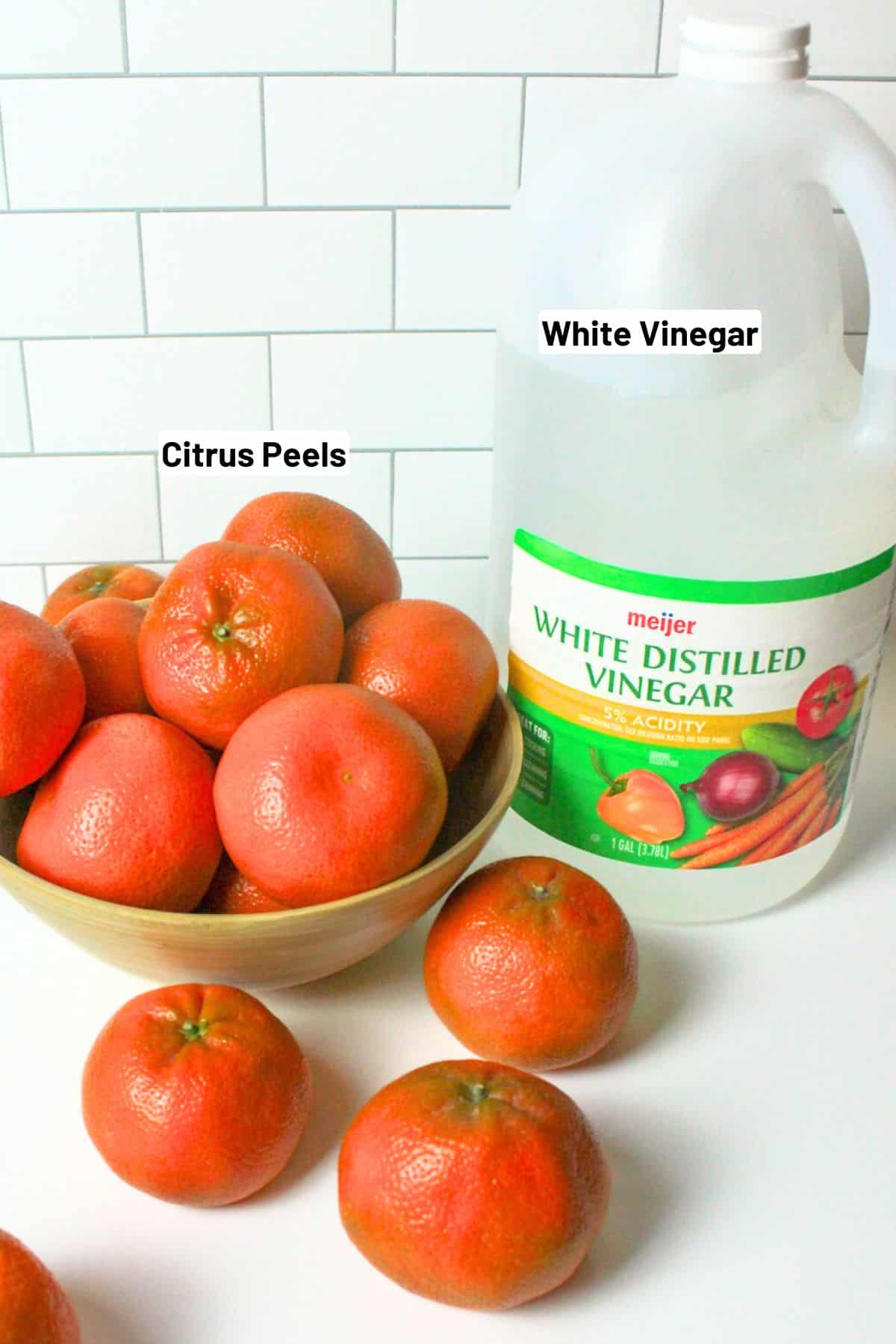
- Citrus Peels (lemon, orange, lime, grapefruit) - Citrus peels are the star of this cleaner. They release natural oils that provide a fresh scent and mild antimicrobial properties. Using leftover peels is a great way to reduce kitchen waste while infusing your cleaner with natural citrus power.
- White Vinegar - Vinegar is the primary cleaning agent in this recipe. Its acidity helps break down grease, grime, and mineral deposits, making it perfect for countertops, sinks, and glass surfaces. While it's antimicrobial, it's not a CDC-approved disinfectant.
- Water - Water is used to dilute the infused vinegar after straining, making the solution safe and easy to spray on surfaces without leaving a strong acidic smell. Distilled water can be used for a streak-free finish.
- (Optional) Essential Oils (tea tree, lemon, or lavender) - Essential oils add a pleasant aroma and may offer mild antibacterial properties. Tea tree is particularly noted for its antimicrobial benefits, while lemon and lavender provide a refreshing scent.
⚠️ Pet Safety Note: Some essential oils can be toxic to pets, especially cats. Always use with caution and keep clean areas well-ventilated.
🧹Instructions for All Purpose Citrus Vinegar Cleaner
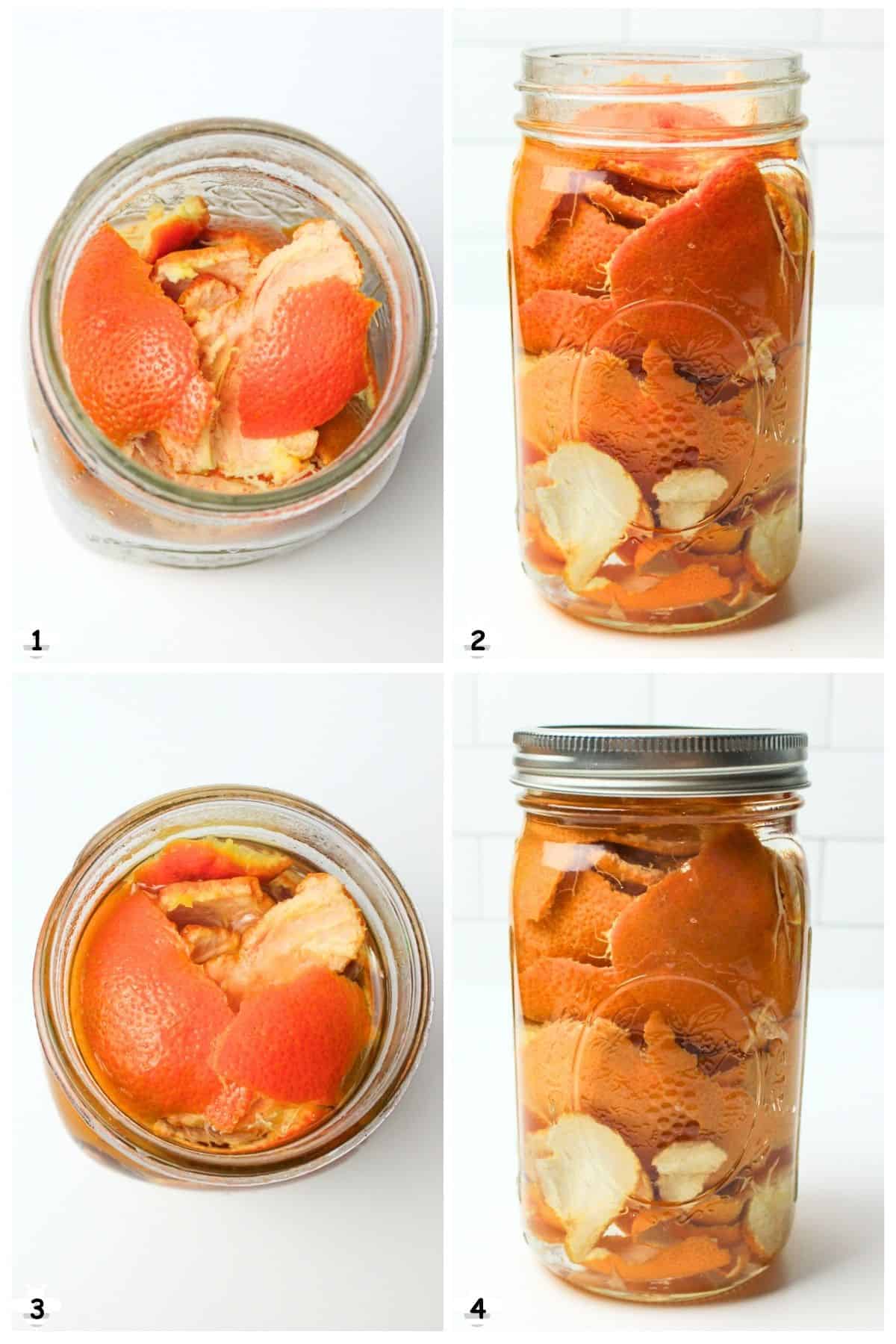
Step 1: Fill a mason jar with citrus peels. Remove excess pith if possible to reduce bitterness in the scent. (Images 1 & 2).
Step 2: Cover peels completely with white vinegar. (Image 3). Seal the jar tightly. (Image 4).
Step 3: Infuse in a cool, dark place for 2 weeks. Shake gently every few days to mix the oils.
Step 4: Strain the vinegar into a clean container, discarding the peels.
Step 5: Dilute 1:1 with water in a spray bottle.
🧽Expert Tips
- Be careful: the vinegar solution can smell strong at first, but the citrus aroma will mellow it over time.
- Avoid using on granite, marble, or other natural stone surfaces. The vinegar's acidity can damage them.
- Oils in citrus peels can go rancid; if it smells off, discard the batch.
- For faster infusion, you can lightly bruise the peels before soaking in vinegar.
🪣Storage
- Infusing: Up to 2 weeks in a cool, dark place.
- After straining: 6 months in a cool, dark location.
- Label your spray bottle with the date for easy reference.
🧤Product FAQs
Vinegar has antimicrobial properties but is not a disinfectant by CDC standards. For full disinfection, use alongside a product like DIY Disinfectant Spray.
Yes, but test on a small area first. Avoid prolonged exposure on unfinished wood.
No, the peels will have released most of their oils and can start to spoil.
Homemade citrus vinegar cleaners are frugal, chemical-free, and customizable. Unlike many commercial cleaners, they also reduce household waste by repurposing peels.
Yes! Tea tree, lemon, or lavender oils enhance fragrance and mild antimicrobial properties, but a few drops are usually sufficient.
🫧More Homemade Cleaning Products


If you tried this All Purpose Citrus Vinegar Cleaner (or any other pattern on my website), please let me know how it went in the 📝 comments below. I'd love to hear from you!

All Purpose Citrus Vinegar Cleaner
Equipment
- Strainer
- Spray bottle
Ingredients
- Citrus peels lemon, orange, lime, grapefruit
- White vinegar
- Water
- Optional: essential oils tea tree, lemon, lavender
Instructions
- Fill mason jar with citrus peels.
- Cover with white vinegar, seal, and infuse 2 weeks.
- Strain and dilute 1:1 with water in spray bottle.
- Optional: Add essential oils.
Notes
- Avoid granite or marble surfaces.
- Vinegar is antimicrobial but not a CDC-standard disinfectant.
- Shelf life: 6 months in a cool, dark place after straining.
- Smell "off"? Discard batch.
- Works well on counters, sinks, windows, and mirrors.




Nicole Durham says
This is by far my favorite cleaner and we go through so much of it that i always have some jarred up under the sink ready to go!