

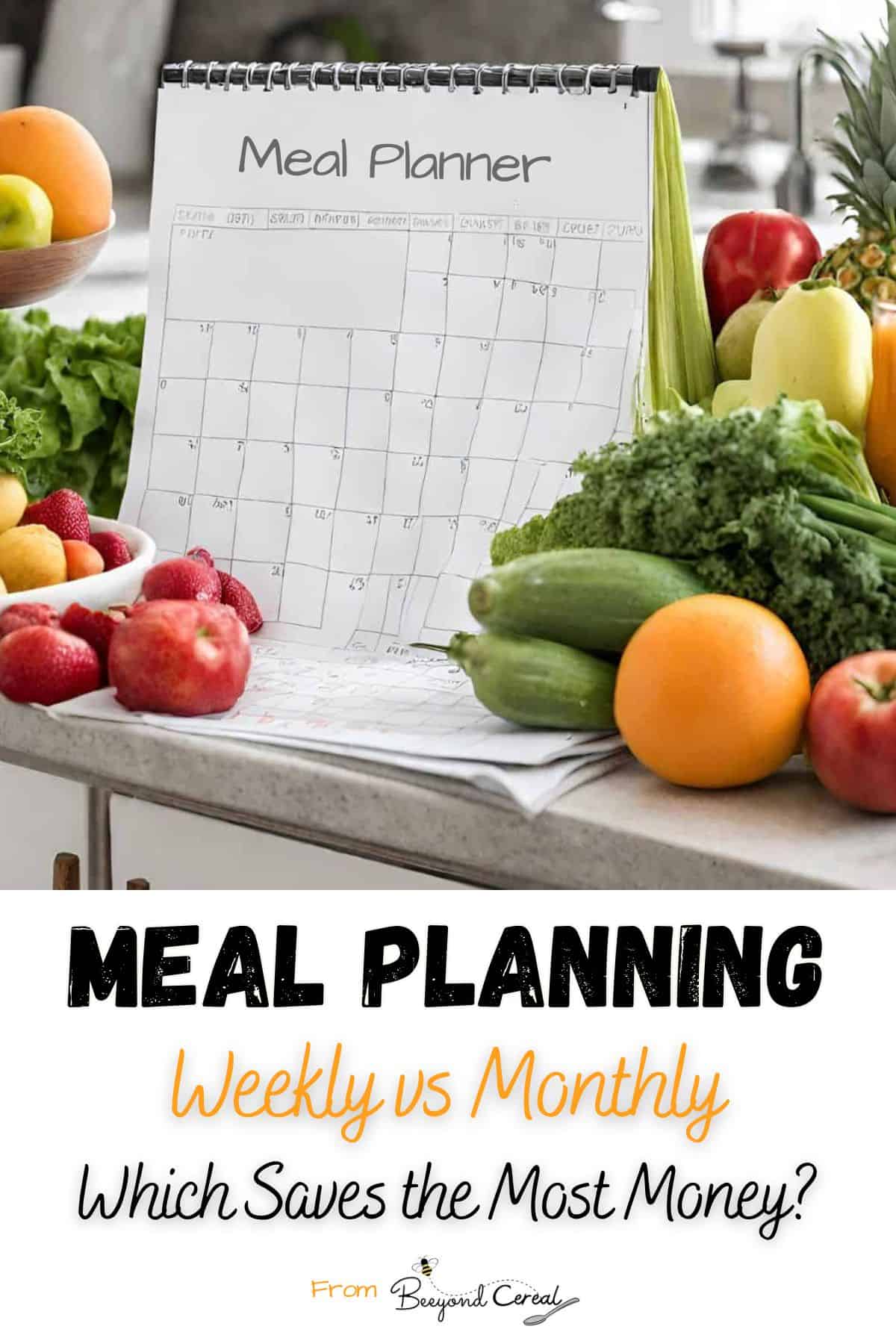
Meal planning is one of the smartest ways to cut grocery costs, reduce food waste, and stay out of the drive-thru. But once you decide to meal plan, the next question is just as important:
Should you plan weekly or monthly? Which one is actually cheaper?
Truthfully… both can work, and both can save you money. But each style works for a different type of person, lifestyle, and budget.
Save This Recipe to Your Inbox
By signing up, you’ll join our email list and can unsubscribe anytime.
Jump to:
Before we break them down, it helps to understand the two approaches people use to build their meal plans:
🧼 Traditional Meal Planning
You create your plan before shopping, follow your grocery list, and avoid impulse buys. This works great for people who thrive on structure and predictability.
🔄 Reverse Meal Planning
You shop first, grabbing markdown meats, clearance produce, discount bread, and pantry fillers, and then build your meals based on what you bought.
This style is amazing for frugal shoppers, especially if you love the clearance section (like I do!) or shop at stores without weekly flyers.
Both methods work beautifully. The real question is how often you should meal plan.
Read more about Reverse Meal Planning vs Traditional Meal Planning.
I like to mix and match my process so that it's a little of both styles. I check my pantry, then go shopping to build off what I have, using what is on sale.
🗓 Weekly Meal Planning: Pros & Cons
Weekly planning is the standard. Most blogs, cookbooks, and meal planning systems use it because it's simple and predictable.
✔️ Weekly Planning Pros
1. It's easier to plan just 7 days at a time.
Creating a whole month of meal ideas can feel overwhelming. Planning for one week is fast and realistic.
2. Weekly sales = weekly savings.
Stores change their sales every week. Weekly meal plans let you chase the best deals as they happen. See Seasonal Shopping (What to Buy and When) for more shopping tips to maximize savings.
3. More flexibility.
If your schedule changes often, weekly planning makes it easy to swap meals around. You might not feel like baking a casserole from scratch after an unexpectedly long day, making those freezer pizzas so much more enticing.
4. Helps break food ruts.
If you like trying new recipes or saving ideas from Pinterest/TikTok, weekly planning lets you build them in sooner.
From experience, I don't recommend trying too many new recipes in a row; it does become stressful. Maybe make one or two days a week "new recipe day" and then fill in the rest with family-favorites.
5. Works well for people with routine.
If you always grocery shop on the same day, have a predictable weekly rhythm, or build habits easily, weekly planning is ideal.
❌ Weekly Planning Cons
1. More store trips = more temptation.
Every time you enter a store, you're exposed to impulse buys, snacks, markdowns, and cravings.
2. You feel like you're always planning.
The week comes around fast, and for many people, the "mental load" of choosing meals every Sunday is exhausting.
3. If you forget one ingredient, it's another store trip.
And another chance to overspend.
Check out our Weekly Meal Plan (with Grocery List) #1 for inspiration.

📅 Monthly Meal Planning: Pros & Cons
Monthly planning is becoming more popular with busy families, bulk shoppers, and people who want fewer grocery trips. But it works best if your schedule is stable.
✔️ Monthly Planning Pros
1. One big planning session = less mental load.
If starting a task is the hardest part for you, monthly planning removes the need to do it every single week.
2. Fewer store trips.
Less temptation = more savings.
3. Perfect for bulk buying.
If you shop at Costco, Sam's Club, or stock up when things are on sale, planning a month at a time is much easier.
4. Works great with online grocery shopping.
Ordering your monthly haul online eliminates most impulse spending and helps you stick to the list.
Check out our monthly meal plans for ideas:
❌ Monthly Planning Cons
1. It's a LOT of work.
- Planning 30 meals takes effort.
- Shopping for 30 meals requires space.
- Prepping ingredients for 30 meals takes time.
It's simply more demanding than weekly planning.
2. You may miss future sales.
If something goes on sale next week, you won't benefit from it.
3. More food = more snacking.
A full pantry can trigger mindless eating, similar to how people spend tax refunds faster just because they "feel" rich.
4. Plans change.
Kids get sick, schedules shift, cravings change. Moving meals around in a monthly plan can feel chaotic.
5. You still need small weekly trips.
Milk, eggs, produce, and bread don't last 30 days.
So monthly planners must still shop weekly for perishables, which brings temptation right back.
🐝 What About Two-Week Meal Planning?
This middle-ground option is becoming extremely popular, and for good reason.
A 2-week meal plan:
- cuts the mental load in half
- still allows you to take advantage of weekly sales
- works well for predictable schedules
- feels much less overwhelming than monthly planning
- pairs nicely with weekly grocery trips if you lack storage space
If weekly planning feels like too much work and monthly planning feels impossible, this might be the perfect compromise.
Not only that, but up to a few days in advance, some weekly grocery ads are available for preview so you can anticipate next week's sales and plan accordingly.

🧊 Practical Considerations Most People Forget
1. Freezer space matters
Bulk shopping and monthly planning require freezer room. Many people underestimate how much space they need. When you live in a small apartment, space is much more limited than that in a 2,000sqft farmhouse with a cellar.
2. Pantry organization affects your success
A messy pantry leads to duplicated purchases and wasted food, especially when planning long stretches.
See: How a Messy Pantry Costs You Money.
3. Leftovers are your best friend
Leftovers reduce stress, reduce waste, and stretch the budget. But some families eat leftovers faster than expected, which can throw off the plan.
See: How to Reuse Leftover Food.
4. Containers matter
Monthly planning or bulk prep requires more containers, more lids, and more freezer bags than people expect. These come with added upfront costs and will, at some point, need to be replaced.
5. Your energy level is a factor
Some people simply don't have the mental space to plan weekly. Others find monthly planning too heavy.
Your system must match your bandwidth.

💡 Tips to Make Any Meal Plan Work
1. Use the envelope method for perishables
Divide your grocery budget into weekly envelopes for milk, eggs, produce. Only use those envelopes during the smaller weekly trips.
2. Build in realistic meals
"Leftover night," "eat from the freezer," "sandwiches," or "breakfast for dinner" count as real meals.
3. Prep on high-energy days
Meal planning should flow around your schedule, not fight it.
4. Shop your pantry first
This prevents overspending and reduces waste.
5. Keep quick backup meals
Frozen nuggets, canned tuna, soup, pasta, eggs.
This stops you from ditching the plan when you're tired.
I like to keep those "just add water" dry soup mixes on hand, as well as frozen nuggets and frozen pizza. With these options, I can have soup, pizza, or nuggets for dinner with minimal prep and effort.
Even better, while the nuggets are baking, I can have rice in the rice cooker and a frozen bag of steamable veggies in the microwave.
🍽 So Which One Is Cheaper?
Here's the truth:
The cheapest meal planning method is the one you can actually stick with.
- If you love clearance deals → Reverse Weekly Planning
- If you love structure → Traditional Weekly Planning
- If you hate planning → Monthly Planning
- If you want balance → Two-Week Planning
- If your schedule changes a lot → Weekly
- If you bulk shop → Monthly
- If you have limited space → Weekly or 2-week
- If you have limited mental energy → Monthly
Your lifestyle determines your savings more than the planning frequency.
At the end of the day, meal planning isn't about perfection; it's about creating a system that supports your real life. Your budget, energy level, storage space, and schedule all play a role in choosing the right approach.
There's no "right" or "wrong" way to plan your meals; there's only the method that helps you stay fed, stay calm, and stay within budget.
Start small, stay flexible, and adjust as you go. Some months you'll need structure, other months you'll rely on clearance finds and pantry meals. That's normal, and honestly, that's what makes frugal cooking sustainable long-term.
No matter which method you choose, every step you take toward planning ahead is a win for your wallet, your stress levels, and your kitchen confidence.
If you're ready to go deeper, check out more frugal meal-planning tools, pantry guides, and budget-friendly recipe ideas here on Beeyond Cereal.
You've got this, one planned meal at a time. 💛🍽️🐝




Comments
No Comments